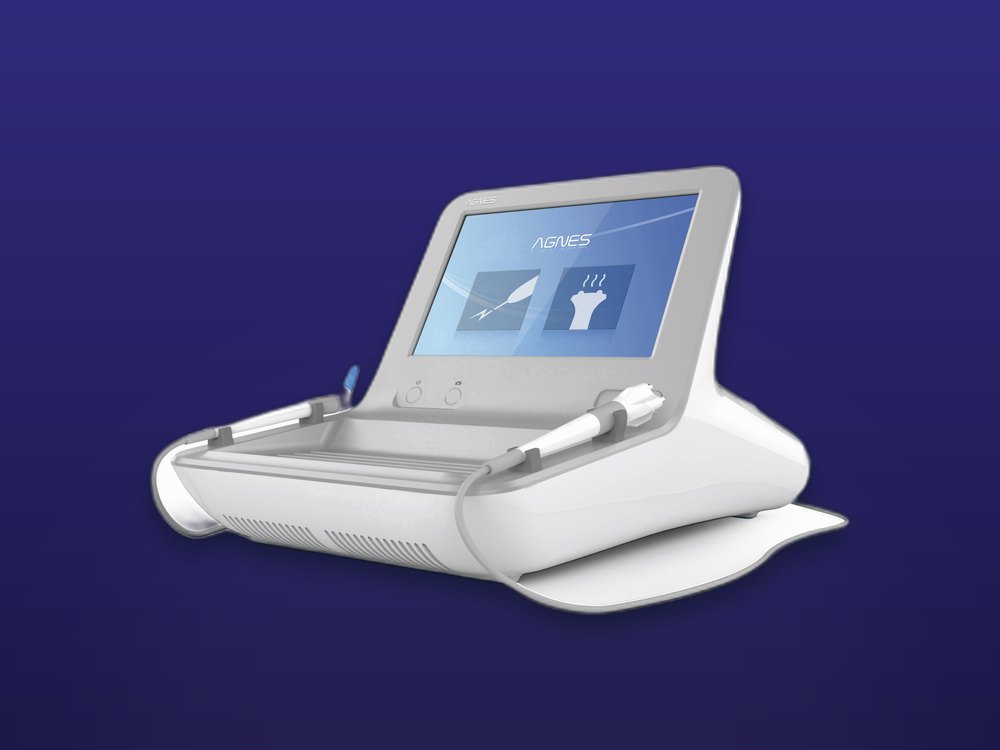
Standard 25-pin and 49-pin fractional RF arrays deliver broad dermal remodeling across the entire cheek—an inefficient and risky approach when treating recurring inflammatory acne cysts confined to a single hyperactive sebaceous follicle, stubborn syringomas, or herniated infraorbital fat pads. A selective single-pin insulated RF microneedle (AGNES architecture) targets individual pathological structures at exact 0.8 mm to 3.0 mm depths with millimeter precision, permanently ablating culprit sebaceous glands and shrinking lower-eyelid fat pads without surgical incisions.
Clinical Engineering Callout: Micro-Insulated Shaft Geometry Protects the Follicular Ostium
The secret behind permanent sebaceous gland ablation without surface pitted scarring lies in partial medical-grade Parylene insulation along the upper 0.5–1.0 mm of a single ultra-fine needle. When inserted directly down an inflamed pore or transcutaneously into an infraorbital fat pocket, the insulated collar shields the epidermal follicular ostium completely while the exposed distal tip focuses 1 MHz–2 MHz monopolar or bipolar RF coagulation strictly inside the target gland or adipose lobule.
1. Biophysical Mechanism of Single-Pin Selective Electro-Thermolysis
Recurrent adult acne, stubborn jawline comedones, and periorbital syringomas persist because conventional topical retinoids, oral antibiotics, and surface lasers merely suppress bacterial colonization or peel the stratum corneum temporarily—leaving the underlying hyperactive sebaceous gland or sweat-duct tumor structurally intact. Once medication stops, sebum surges back in the exact same follicle.
By utilizing a selective single-pin insulated RF microneedle engineered on the AGNES Selective RF Microneedling Platform, clinicians insert a single calibrated micro-needle (ranging from C-type 0.8 mm pore needles to I-type 1.5 mm acne needles and W-type 2.5–3.0 mm eye-bag probes) directly into the pathological structure. High-frequency current discharges solely from the uninsulated distal tip, coagulating the sebaceous acini or sweat duct permanently while leaving surrounding normal dermis and overlying epidermis untouched.
- Zero Systemic Side Effects: Eliminates recurring acne flares permanently without isotretinoin teratogenicity, hepatotoxicity, or antibiotic resistance.
- Single-Follicle Precision: Coagulates only diseased hyperactive pores rather than traumatizing 100% of surrounding healthy cheek skin.
- Non-Surgical Lipolysis Capability: Longer insulated probes melt herniated lower-eyelid fat pockets and tighten overlying orbicularis skin in one 30-minute office procedure.
2. Clinical Protocol Matrix: Recurring Acne, Syringomas, Blackheads & Under-Eye Bags
Selecting the exact insulated single-pin needle model, insertion angle, and RF pulse timing is essential for predictable clinical endpoints across four flagship indications:
| Clinical Indication | Needle Profile & Depth | Target Structure | Technique & Clinical Endpoint | Sessions Required |
|---|---|---|---|---|
| Inflammatory & Cystic Acne | I-Type / F-Type (1.2 – 1.5 mm) | Hyperactive sebaceous gland lobules | Express comedone first; insert along follicular shaft; 120–180 ms RF pulse | 1 – 3 sessions (4-wk gap) |
| Stubborn Nasal Blackheads | C-Type / S-Type (0.8 – 1.0 mm) | Dilated sebum-rich T-zone pores | Gentle vertical follicular insertion; mild blanching absent; zero crust | 2 – 3 sessions |
| Periorbital Syringomas | S-Type (0.8 – 1.2 mm) | Benign eccrine sweat duct papules | Micro-puncture into papule center; controlled deep shrinkage without surface scar | 2 – 4 sessions (6-wk gap) |
| Non-Surgical Under-Eye Bags | W-Type (2.0 – 3.0 mm) | Prolapsed infraorbital fat pads & dermis | Multi-point transcutaneous grid across lower lid pad; gentle tissue compression | 1 – 2 sessions (8-wk gap) |
3. Non-Surgical Under-Eye Bag Reduction & Jawline Contour Sculpting
Lower-eyelid fat herniation (“eye bags”) has traditionally forced patients toward invasive transconjunctival blepharoplasty or temporary tear-trough fillers that often migrate or cause Tyndall bluish discoloration. Using a longer 2.0–3.0 mm selective single-pin insulated RF microneedle, clinicians numb the infraorbital zone thoroughly via local infiltration or strong topical/regional block, retract the lower lid gently onto the orbital rim bone, and insert the insulated needle sequentially across 15–25 entry points spaced 3 mm apart.
At 2.5–3.0 mm depth, controlled monopolar RF current thermally emulsifies protruded orbital fat lobules while simultaneously shrinking the stretched orbital septum and overlying dermis. As macrophages clear lysed adipocytes over 6 to 8 weeks, the lower lid flattens naturally with tightened skin elasticity—achieving surgical-grade contour improvement with 3–5 days of mild swelling and zero external suture scars.
4. Mandatory Day-2 Post-Treatment Sebum Extraction SOP (Acne Protocol)
A critical clinical pearl separates expert AGNES practitioners from novices when treating active inflammatory acne: 48-hour secondary comedone extraction. Immediately after single-pin RF ablation destroys a sebaceous gland, liquefied cellular debris and residual sebum remain trapped inside the coagulated pore.
Schedule every acne patient for a brief 10-minute nurse visit 24 to 48 hours post-procedure to express softened residual sebum gently using sterile cotton swabs (never harsh metal loop extractors that bruise coagulated tissue). This two-step ablation-plus-extraction workflow cuts post-treatment purging pustules by over 80% and clears recalcitrant jawline and chin cysts rapidly.
5. Integrating Single-Pin Selective Ablation With 25/49-Pin Matrix Resurfacing
Many chronic acne patients present simultaneously with active recurring sebaceous cysts AND depressed rolling/boxcar scars from past breakouts. Attempting full-face fractional RF stamping over active pus-filled cysts spreads bacteria and triggers flare-ups. Instead, perform targeted single-pin ablation on the AGNES Platform first to permanently silence active sebaceous glands across Weeks 1–8; once active cyst formation stops, transition cleanly to multi-pin dermal remodeling on the Gold Insulated RF Microneedling System to elevate and smooth residual atrophic scars.
6. Safety Precautions, Needle Integrity Checks & Contraindications
- Insulation Integrity Discipline: Never reuse single-patient micro-needles or wipe insulated tips with abrasive gauze; damaged Parylene insulation allows RF current to leak onto the epidermal surface, causing pinpoint thermal burns and post-inflammatory hyperpigmentation.
- Ocular & Nerve Boundaries: When treating periorbital syringomas or under-eye bags, always keep the needle tip angled away from the globe and remain superficial to the inferior orbital rim periosteum.
- Contraindications: Implanted pacemakers or defibrillators, pregnancy, active systemic bacterial infection, keloid predisposition over the sternum/jawline, and recent isotretinoin use within 3 months.
7. Microscopic Follicular Alignment & Depth-Specific Needle Selection
Achieving permanent acne remission without surface scarring on a selective single-pin insulated RF microneedle system hinges on respecting natural pilosebaceous follicle anatomy. Rather than stabbing blindly at 90 degrees into skin regardless of pore orientation, observe each enlarged sebaceous pore under bright LED magnification and insert the insulated needle smoothly along the exact anatomical angle of the follicle shaft (typically 60°–75° on nasal alae and jawline).
For shallow nasal blackheads and mild open comedones, select 0.8–1.0 mm C-type probes at gentle 100–120 ms RF duration; for deep nodular chin and jawline cysts, transition to 1.4–1.5 mm I-type probes after expressing thick trapped keratin plugs so RF current coagulates the deep lobular gland cleanly rather than boiling surface sebum. Keep clean sterile saline gauze ready to wipe tiny sebum beads between follicles so electrical contact stays crisp.
8. Post-Eye-Bag Swelling Management & Clinic Consultation Framing
When consulting patients for non-surgical W-type under-eye bag lipolysis, set clear expectations around the 5- to 7-day inflammatory edema phase that accompanies deep fat pad coagulation. Unlike zero-downtime surface facials, coagulating herniated infraorbital fat triggers temporary localized swelling and occasional mild pinpoint bruising—followed by progressive tightening over Weeks 4 through 10 as macrophages clear emulsified adipocytes. Recommend sleeping slightly elevated on two pillows for 48 hours and returning at Week 8 for standardized upright photography before deciding whether a subtle touch-up pass is needed.
Expanded Periorbital Local Anesthesia & Sterile Tip Replacement Discipline
When executing non-surgical lower-eyelid fat pad reduction with a selective single-pin insulated RF probe, patient comfort and tissue immobility depend on adequate infraorbital analgesia. Apply topical 5% lidocaine cream under gentle occlusion for 35 minutes (keeping cream clear of the conjunctival sac), then administer minute 0.2–0.3 mL subcutaneous blebs of 1% buffered lidocaine with epinephrine along the planned entry grid if deeper W-type passes are performed. Always replace the single-pin insulated cartridge immediately if tip impedance jumps unexpectedly or visible carbonization appears on the needle shaft.
Clinical Integration, Product Architecture & Pillar Reference
Add pinpoint surgical-free lesion ablation to your clinic with the AGNES Selective Single-Pin RF Microneedling System, seamlessly complemented by full-face scar remodeling on our Gold RF Microneedling Platform. Read the full medical aesthetic microneedling device clinical guide for comprehensive multi-pin impedance and depth protocols.
Frequently Asked Questions (Clinical & Engineering)
How does a selective single-pin insulated RF microneedle cure recurring acne without harming skin surface?
Medical-grade insulation wraps the upper needle shaft to protect the epidermal pore opening completely while the exposed distal tip delivers RF heat directly into the sebaceous gland at 1.2–1.5 mm depth, permanently reducing oil overproduction.
Can AGNES single-pin RF really shrink under-eye bags without surgery?
Yes. By inserting a calibrated 2.0–3.0 mm insulated probe into prolapsed infraorbital fat pads, focused RF energy safely melts excess fat lobules and contracts the overlying dermis with no incision scars.
Why is a 48-hour follow-up extraction recommended after single-pin acne RF?
Gentle extraction 24–48 hours post-treatment clears coagulated sebum and debris left inside the ablated pore, preventing transient sterile pimples and accelerating clear skin recovery.