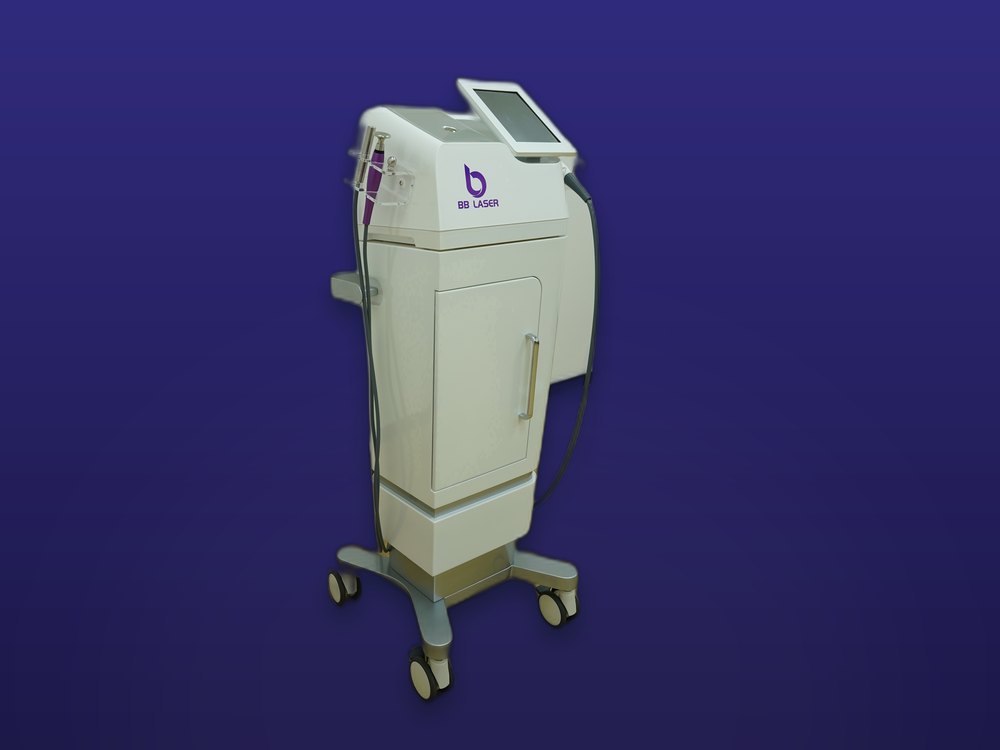
Modern urban aesthetic patients demand visible pore contraction, smooth skin radiance, and fine-line reduction—yet reject the 7-day oozing crusts of ablative CO2 lasers. A 1470nm non-ablative fractional laser bridges that gap through precision mid-infrared water absorption: coagulating the upper-to-mid reticular dermis and sebaceous infundibulum while keeping the protective stratum corneum 100% intact for zero-crusting ‘BB Laser’ recovery.
Clinical Engineering Callout: Water Absorption Peak Precision: 1470 nm vs. 1550 nm
Water’s mid-infrared absorption coefficient at 1470 nm (~25 cm⁻¹) is more than double that of 1550 nm Erbium-Glass (~10 cm⁻¹). Consequently, a 1470 nm diode laser concentrates thermal coagulation cleanly within the 200–700 micron upper-reticular dermal zone—right where dilated pore walls, superficial acne scars, and hyperactive sebaceous glands reside—requiring less bulk energy and inflicting markedly lower treatment pain than deeper-penetrating 1550 nm beams.
1. Biophysical Interaction of 1470 nm & 1550 nm Non-Ablative Micro-Thermal Zones
Non-ablative fractional resurfacing relies on selective water heating rather than tissue vaporization. When a focused 1470nm non-ablative fractional laser scans microscopic beamlets across the skin, epidermal corneocytes—which contain only 10%–15% free water—transmit the pulse largely unharmed. Upon reaching the hydrated dermis (70% water content), photon absorption rapidly heats microscopic cylindrical columns (Micro-Thermal Zones, or MTZs) to 60°C–68°C without vaporizing cellular membranes.
Because the stratum corneum remains physically unbroken, transepidermal water loss stays minimal, bacterial infection risk drops near zero, and patients exhibit only 24–48 hours of sunburn-like pinkness rather than open exudative wounds. Over the subsequent 3–5 days, microscopic epidermal necrotic debris (MENDs) migrates invisibly upward while dermal fibroblasts synthesize new perifollicular collagen that tightens lax pore architecture.
Compared to 1550 nm Erbium-Glass systems—which penetrate 800–1,400 microns deep and require aggressive topical numbing due to deep sensory nerve stimulation—1470 nm focuses energy precisely where epidermal texture, early photoaging, melasma-associated barrier fragility, and excess sebum originate.
- 2.5x Higher Water Absorption Than 1550 nm: Delivers crisp papillary-to-upper-reticular MTZs at lower pulse energy (5–15 mJ/MTZ).
- Sebaceous Pore Remodeling: Concentrated heating at 300–600 µm shrinks dilated follicular funnels and normalizes sebum output.
- Melanin-Blind Wavelength: Near-zero melanin absorption at 1470 nm makes non-ablative fractional diode treatment safe year-round across Fitzpatrick I–V skin.
2. Clinical Protocols: Zero-Crusting Pore Refinement & Barrier Rebuilding
Protocol calibration on a 1470 nm optical scanner adjusts two independent levers: MTZ Pulse Energy (mJ), which dictates column coagulation depth (200–700 µm), and Spot Density (MTZs/cm² or % coverage), which dictates cumulative thermal load.
For Zero-Downtime ‘BB’ Radiance & Barrier Rebuilding (ideal for sensitive, rosacea-prone, or dull dehydrated skin), select ultra-gentle superficial energy (4–8 mJ per micro-spot) at 10%–15% coverage across 2 rolling passes. Mild dermal hyperemia stimulates mast-cell-free vascular normalization and increases topical serum permeability by 4x–8x without stripping barrier lipids.
For Enlarged Pores, Seborrhea & Mild Boxcar Scars, elevate energy to 10–18 mJ per micro-spot at 15%–25% coverage across the T-zone and malar cheeks, applying chilled air cooling simultaneously to maximize patient comfort.
3. Laser-Assisted Transdermal Drug Delivery (LADD)
Although 1470 nm leaves the physical stratum corneum intact, transient thermal loosening of intercellular lipid bilayers creates a 6-hour permeability window ideal for macromolecular active serums. Immediately following the scan, clinicians apply sterile low-molecular-weight hyaluronic acid, tranexamic acid (for melasma brightening), polydeoxyribonucleotide (PDRN), or growth-factor peptides to amplify dermal matrix regeneration.
4. Comparison With 10,600 nm CO2 & Picosecond MLA
Practices should position 1470 nm non-ablative fractional lasers as the high-retention middle tier between zero-downtime picosecond toning and high-downtime ablative CO2 resurfacing. Deep ice-pick scars or severe surgical scars still benefit from ablative 10,600 nm CO2 Fractional Laser micro-vaporization, whereas 1470 nm captures the vast demographic of working professionals seeking noticeable pore contraction and glow with Friday-to-Monday recovery.
Non-Ablative & Ablative Fractional Laser Comparison Matrix
Compare chromophore absorption, coagulation depth, pain level, and social downtime across fractional laser platforms:
| Specification | 1470 nm Non-Ablative Diode (BB Laser) | 1550 nm Erbium Glass | 10,600 nm Ablative CO2 Fractional |
|---|---|---|---|
| Water Absorption Coefficient | ~25 cm⁻¹ (High upper-dermal selectivity) | ~10 cm⁻¹ (Deeper diffuse penetration) | ~800 cm⁻¹ (Instantaneous surface vaporization) |
| Coagulation Depth Range | 200 – 700 µm (Upper/mid dermis) | 400 – 1,400 µm (Deep reticular dermis) | 300 – 1,800 µm (Ablative crater + thermal rim) |
| Stratum Corneum Status | 100% Intact (Zero open oozing) | 100% Intact (Micro-swelling) | Ablated micro-channels (Crusting) |
| Topical Anesthesia Need | Minimal / Optional (20 min low-dose) | Mandatory (45 min strong topical) | Mandatory + Nerve blocks for high density |
| Social Downtime | 24 – 48 hrs mild pinkness | 3 – 4 days erythema & bronzing | 5 – 10 days crusting & redness |
| Ideal Clinic Application | Enlarged pores, skin glow, barrier repair, LADD | Deep static rhytids, moderate rolling scars | Severe atrophic acne scars, deep elastosis |
5. Optical Fiber Scanning Precision & Epidermal Thermal Safety
Because water acts as the sole target chromophore for a 1470nm non-ablative fractional laser, epidermal melanin concentration has virtually zero influence on photon absorption. This optical property eliminates the narrow safety margins of visible-light or 755 nm lasers in Fitzpatrick IV–VI patients. Instead, precision galvo or roller optical scanners distribute 1470 nm micro-beams (spot diameter ~120–180 microns) in randomized non-sequential patterns so no two adjacent Micro-Thermal Zones fire back-to-back.
Randomized micro-beam sequencing gives surrounding dermal tissue 50–150 milliseconds to dissipate radial heat before an adjacent point fires, preventing bulk thermal stacking burns across thin malar or nasal skin. Clinicians can safely treat enlarged T-zone pores, mild perioral fine lines, and sensitive barrier-impaired skin in 15-minute sessions without nerve blocks or occlusive dressings.
6. Clinical Contraindications, Active Acne Integration & Serum Pairing
- Optimal Serum Selection for LADD: Immediately after 1470 nm fractional scanning, avoid irritating L-ascorbic acid (low pH stings), high-concentration retinol, or fragranced botanicals. Use strictly sterile, preservative-free ampoules of low-molecular-weight hyaluronic acid, 2%–5% tranexamic acid, PDRN, or biomimetic growth factors during the 6-hour post-laser permeability window.
- Multimodal Scar & Pigment Protocols: Alternate 1470 nm BB Fractional Laser barrier-rebuilding sessions with PICOSTAR MLA picosecond passes for refractory boxcar scars, or escalate deep surgical scars to ablative CO2 Fractional Laser resurfacing.
- Contraindications: Defer treatment in patients with active bacterial impetigo, open facial abrasions, active herpes labialis (initiate antiviral prophylaxis 24 hours prior if perioral scanning is planned), photosensitizing medications, or unrealistic expectations regarding deep ice-pick scars requiring subcision or ablative punch elevation.
7. Solid-State Diode Reliability vs. Erbium-Glass Flashlamp Maintenance
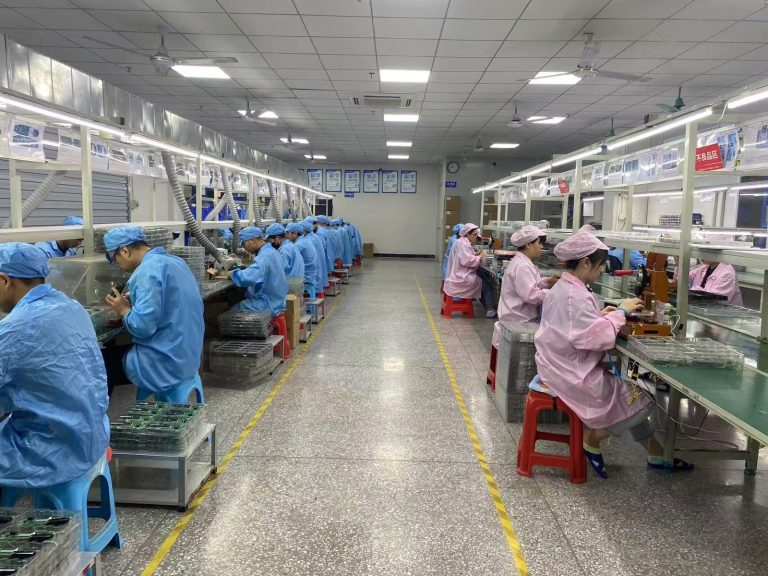
Unlike 1550 nm Erbium-Glass lasers—which rely on fragile flashlamp-pumped glass rods, complex optical cavities, and expensive fiber-optic replacements—1470 nm fractional platforms utilize solid-state semiconductor diode emitters coupled cleanly into durable scanning handpieces. Clinics gain instantaneous warm-up, minimal power consumption, zero gas/dye consumables, and over 10,000+ hours of diode stability.
Expanded Perifollicular Collagen Remodeling & Home-Care Maintenance
Long-term sebaceous pore contraction after a 1470nm non-ablative fractional laser protocol relies on sustaining upper-reticular neocollagenesis across three consecutive monthly sessions. Within 72 hours of each scan, micro-thermal coagulation zones trigger upregulation of TGF-beta and HSP70 signaling without stripping epidermal ceramides, gradually thickening perifollicular connective tissue collars that tighten stretched pore walls. Instruct patients to avoid exfoliating alpha-hydroxy acids, benzoyl peroxide, and retinoids for 5 days post-procedure while prioritizing broad-spectrum zinc-oxide UV protection and peptide hydration. Clinics frequently pair quarterly 1470 nm maintenance passes with monthly hydra-dermabrasion to keep follicular orifices clear of oxidized sebum plugs and maintain glass-skin optical smoothness year-round.
Scanner Roller Calibration & Periorbital Tip Selection
When transitioning between broad malar cheeks and delicate infraorbital skin on a 1470 nm fractional diode workstation, reduce spot coverage density from 20% down to 10% and lower pulse energy to 5–7 mJ/MTZ over thin 0.5 mm lower-eyelid tissue. Clean optical sapphire scanning tips with 70% isopropyl alcohol wipes between passes so accumulated sebum or dried topical mist never absorbs mid-infrared beamlets prematurely at the lens window. Standardized high-resolution cross-polarized clinical photography at Baseline and Week 12 enables objective documentation of pore diameter reduction and surface texture smoothing.
Expanded Dermal Architecture Remodeling & Multi-Session Package Design
To translate the biophysical precision of a 1470 nm non-ablative fractional diode laser into predictable clinic growth, structure 4-session “Porcelain Pore & Barrier Reset” courses spaced strictly 28 days apart to match epidermal keratinocyte turnover and reticular fibroblast maturation cycles. During Sessions 1 and 2, prioritize gentle 8–10 mJ/MTZ barrier-strengthening scans across the full face; during Sessions 3 and 4, intensify focal 14–18 mJ/MTZ density selectively across dilated T-zone pores and shallow rolling cheek scars while keeping periorbital bone margins conservative at 5–7 mJ/MTZ.
Clinical Integration, Product Architecture & Pillar Reference
Integrate zero-crusting pore refinement and laser-assisted barrier rebuilding with the 1470nm Non-Ablative Fractional Laser Platform, complemented by ablative scar revision on the CO2 Fractional Laser System and acoustic MLA rejuvenation on the PICOSTAR Picosecond Laser. Read our core medical aesthetic laser device engineering breakdown for full MTZ physics.
Frequently Asked Questions (Clinical & Engineering)
Why does a 1470nm non-ablative fractional laser cause less downtime than CO2?
At 1470 nm, energy passes cleanly through the low-water stratum corneum without vaporizing the surface, coagulating dermal collagen gently beneath an intact epidermal barrier.
How does 1470nm compare to 1550nm Erbium Glass?
1470nm has roughly double the water absorption of 1550nm, focusing heat efficiently at 200–700 µm for pores, texture, and sebum control with noticeably lower discomfort.
Can 1470nm fractional laser be combined with topical serums?
Yes. Applying sterile tranexamic acid, PDRN, or hyaluronic acid immediately post-scan leverages thermal lipid-bilayer permeability for enhanced transdermal absorption.