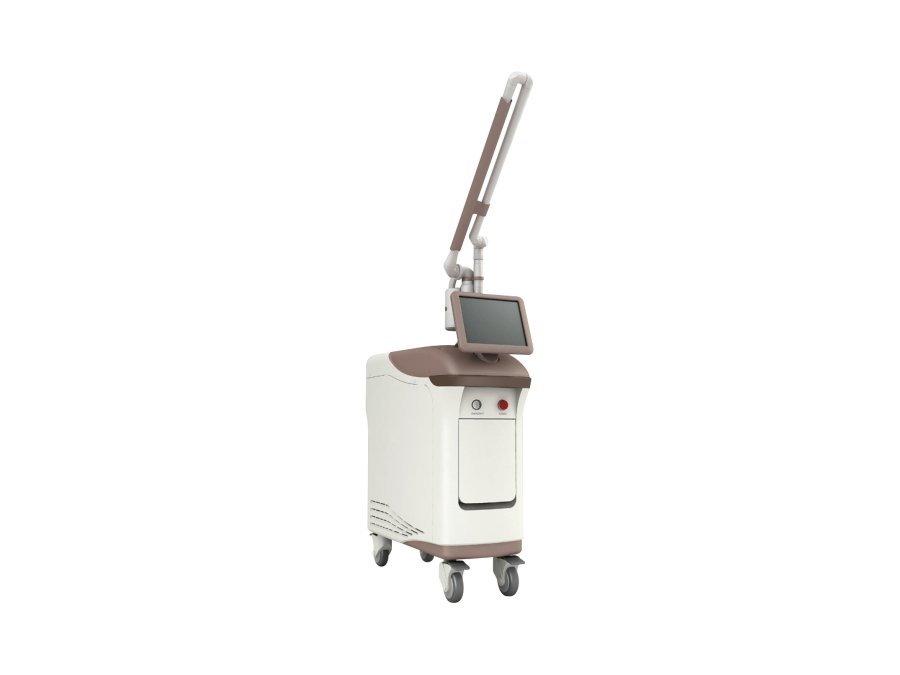
Treating dermal melasma and Fitzpatrick IV–VI pigmentary disorders remains one of dermatology’s most delicate balancing acts: aggressive high-fluence pulses rupture melanocytes and provoke severe rebound hyperpigmentation, whereas under-powered flashes leave stubborn dermal pigment untouched. Next-generation Q-switched Nd:YAG 1064nm 532nm laser platforms equipped with Rapid Twin-Pulse (RTP) and Fractional 4G collimated optics deliver gentle acoustic subcellular toning—clearing melasma, Nevus of Ota, and solar lentigines safely.
Clinical Engineering Callout: RTP Twin-Pulse Subcellular Melanin Fragmentation
In Rapid Twin-Pulse (RTP) mode, a single macro-pulse is split cleanly into two ultra-fast nanosecond sub-pulses separated by ~100–140 microseconds. The first sub-pulse safely pre-stresses and swells target melanosomes within melanocyte dendrites, while the second sub-pulse shatters them at half the peak thermal spike—reducing melanocyte cytolysis, guttate hypopigmentation, and rebound melasma by over 60% compared to single high-energy Q-switched shots.
1. Optical Physics of 1064 nm / 532 nm & Top-Hat Beam Homogeneity
Effective pigment toning on a Q-switched Nd:YAG 1064nm 532nm laser starts with spatial beam profile uniformity. Low-cost passive Q-switched handpieces suffer from Gaussian ‘hot-spot’ beams whose center energy spikes 2–3x higher than the beam periphery—burning central epidermis while under-treating margins. Articulated-arm electro-optic (active) Q-switched systems project true Top-Hat flat energy profiles, ensuring every square millimeter across an 8 mm or 10 mm spot receives identical fluence.
Wavelength selection tracks melanin depth and oxyhemoglobin competition: 1064 nm infrared penetrates 2–3 mm deep into the reticular dermis with moderate melanin absorption and minimal epidermal interference, making it the gold standard for mixed/dermal melasma, Nevus of Ota, Hori’s nevus, and dark-skin laser toning. Frequency-doubled 532 nm green exhibits intense melanin and oxyhemoglobin absorption inside the basal epidermis, ideal for discrete solar lentigines, ephelides, and café-au-lait macules in lighter phototypes.
- RTP Twin-Pulse Mode: Halves peak instantaneous thermal shock while maintaining high cumulative acoustic clearance for unstable melasma.
- Fractional 4G Optics: Splits 1064 nm energy into micro-collimated beams for combined pigment clearance, pore contraction, and gentle dermal collagen stimulation.
2. Zero-Rebound Melasma Toning & Nevus of Ota Protocols
Melasma is not merely excess melanin; it is a photoaged dermal-vascular microenvironment driven by hyperactive melanocytes, basement membrane micro-breaks, and elevated VEGF-mediated erythema. Consequently, conventional ablative or high-fluence Q-switched treatment triggers an inflammatory cytokine surge that worsens pigmentation within 4 weeks.
In Zero-Rebound RTP Laser Toning, set 1064 nm to an 8–10 mm collimated spot at ultra-low fluence (1.2–2.2 J/cm² single equivalent split via RTP) at 10 Hz. Glide smoothly across the malar and forehead zones for 2–3 passes—stopping strictly at faint, transient pinkness and mild warmth, never purpura or white frosting. Pair laser toning with oral/topical tranexamic acid and strict mineral photoprotection across 8–10 bi-weekly sessions.
By contrast, congenital Nevus of Ota and acquired Hori’s nevus sit deep in dermal melanocytes resistant to rebound. Here, clinicians employ smaller 3–4 mm high-fluence 1064 nm spots (4.5–7.0 J/cm²) spaced 8–12 weeks apart until uniform mild grayish-white immediate tissue whitening appears.
3. Fractional 4G Carbon Laser Peel (Black Doll Protocol)
For seborrheic congestion, enlarged pores, and mild inflammatory acne, combining medical-grade micronized carbon lotion with 1064 nm quasi-long-pulse (300 µs) and Q-switched RTP passes delivers rapid lunchtime resurfacing. First, paint a thin carbon suspension onto clean skin and wait 10 minutes for penetration into follicular ostia. Pass 1 (quasi-long-pulse 300 µs) thermally warms sebaceous follicles; Pass 2 (Q-switched 1064 nm at 1.8–2.5 J/cm²) photoacoustically vaporizes carbon micro-particles, stripping oxidized sebum, exfoliating stratum corneum, and stimulating pore-wall tightening with zero downtime.
4. Contraindications & Melasma Maintenance Strategy
Never perform 532 nm spot treatments over active melasma patches or tanned Fitzpatrick IV–VI skin, as intense epidermal thermal shock triggers immediate PIH. Before initiating laser toning, screen patients for photosensitizing medications (isotretinoin within 3 months, tetracyclines), active herpes simplex, and recent unprotected UV exposure. Once melasma achieves 80%+ clearance, transition patients to quarterly maintenance toning plus daily broad-spectrum iron-oxide tinted mineral sunscreen.
Q-Switched Nd:YAG (1064/532 nm) Clinical Parameter Matrix
Standardized clinical configurations for RTP Twin-Pulse toning, Fractional 4G, dermal nevi, and epidermal lentigines:
| Pigmentary Condition | Mode & Wavelength | Spot Size | Fluence | Clinical Endpoint & Interval |
|---|---|---|---|---|
| Melasma (Mixed / Dermal) | RTP Twin-Pulse 1064 nm | 8 – 10 mm | 1.2 – 2.2 J/cm² | Faint pinkness only (zero frosting); q2 weeks |
| Nevus of Ota / Hori’s Nevus | Q-Switched 1064 nm | 3 – 4 mm | 4.5 – 7.0 J/cm² | Delayed gray-white whitening; q8–12 weeks |
| Solar Lentigines / Ephelides | Q-Switched 532 nm | 2 – 3 mm | 0.8 – 1.4 J/cm² | Immediate crisp white frosting; q6 weeks |
| Carbon Pore Peel (Black Doll) | 300µs + Q-Switched 1064 nm | 7 – 8 mm | 1.5 – 2.5 J/cm² | Clean carbon vaporization + mild glow; q3–4 weeks |
| Textural Toning & Erythema | Fractional 4G 1064 nm | 7 mm matrix | 1.8 – 3.0 J/cm² | Diffuse transient erythema; q3–4 weeks |
5. Dual-Rod Optical Cavity Stability & Top-Hat Energy Calibration
The clinical difference between reliable zero-rebound melasma clearance and unpredictable guttate hypopigmentation lies in laser-rod thermal lensing and beam-profile calibration. As flashlamps fire thousands of pulses at 10 Hz during a full-face toning pass, inferior single-rod resonators overheat, causing beam divergence and dangerous central energy spikes. Active electro-optic dual-rod resonators—such as those engineered into the HELIOS III Pigment Laser—compensate thermally to preserve a flat-top Top-Hat beam geometry across 8 mm and 10 mm collimated spots.
Furthermore, RTP Twin-Pulse mode divides each macro-pulse into two phase-locked nanosecond bursts separated by ~100–140 microseconds. Because melanosomes measure sub-micron in diameter, their thermal relaxation occurs within nanoseconds, yet the melanocyte cell body requires milliseconds to recover from thermal stress. Delivering two gentler acoustic impulses clears fragmented melanosomes across dendritic tips while preserving melanocyte viability and preventing mottled depigmentation (‘confetti leukoderma’).
6. Combined Melasma Pharmacotherapy, Safety Boundaries & Patient Compliance
- Multimodal Melasma Synergy: Laser toning alone addresses existing dermal/epidermal melanin deposits but does not suppress upstream hormonal or UV melanogenesis signals. Pair bi-weekly RTP 1064 nm toning with topical cysteamine, arbutin, azelaic acid, or physician-prescribed oral tranexamic acid (250 mg BID in screened non-thrombotic candidates) for durable remission.
- Strict Endpoint Discipline: Never chase immediate complete pigment clearance in a single melasma session. Excess fluence induces dermal-epidermal junction vacuolization and rebound hyperpigmentation within 3–4 weeks. Stop every pass strictly at mild, transient erythema.
- Ocular & Anatomical Protection: All operators and patients must wear OD 6+ wavelength-certified laser safety goggles (1064/532 nm). When treating periorbital Nevus of Ota inside the bony orbital rim, insert lubricated stainless-steel corneal eye shields after applying proparacaine ophthalmic drops.
7. Lamp Lifespan, De-Ionized Cooling & High-Volume Clinic Throughput
With zero per-shot disposable handpiece tips, active Q-switched Nd:YAG toning delivers one of the lowest variable cost-per-treatment structures in aesthetic dermatology. Maintaining monthly de-ionized water filter changes and annual articulated-arm mirror alignment verification preserves full optical output across 5–10 million+ shots.
Expanded Melasma Barrier Stabilization & Q-Switched Beam Homogeneity
Preventing confetti-like guttate hypopigmentation during high-frequency Q-Switched 1064 nm laser toning requires strict adherence to both beam profile uniformity and cumulative session fluence caps. A true flat-top optical beam profile prevents hot-spot energy spikes across the center of an 8–10 mm collimated spot, keeping each sub-threshold pass at 1.4–2.0 J/cm² comfortably below melanocyte apoptosis thresholds. Clinicians should pause active laser toning immediately if early perifollicular graying or subtle speckled hypopigmentation appears, transitioning the patient to 4–6 weeks of barrier-rebuilding ceramides, topical niacinamide, and oral tranexamic acid before resuming low-fluence RTP twin-pulse maintenance sessions at 2- to 3-week intervals.
Optical Cavity Cooling, Flashlamp Lifespan & Post-Toning Sun Protection
Consistent nanosecond Q-Switched pulse energy relies on deionized water chiller stability maintaining Nd:YAG crystal rod temperatures between 22°C and 25°C. Flush closed-loop distilled cooling reservoirs every 90 days and verify Pockels-cell high-voltage alignment whenever pulse-to-pulse energy drift exceeds 5%. Post-procedure, patients must avoid hot saunas, abrasive scrubs, and direct midday UV exposure for 72 hours while applying broad-spectrum tinted iron-oxide mineral sunscreen daily to shield sensitized melanosomes from visible-light rebound pigmentation.
Expanded Pigment Clearance Kinetics & Combination Tranexamic Protocols
Clinicians managing recalcitrant dermal melasma with RTP twin-pulse 1064 nm Q-Switched Nd:YAG lasers achieve superior 6-month stability by synchronizing mechanical melanosome shattering with oral or intradermal melanogenesis suppression. Low-fluence twin-pulse bursts fracture pigment granules inside hyperactive dendritic melanocytes without triggering thermal rupture or inflammatory prostaglandin cascades, allowing resident macrophages to phagocytose fine melanin dust gradually across 14-day intervals. Pair every third toning session with sterile topical tranexamic acid (3%–5%) or low-fluence 590 nm vascular IPL sweeps when telangiectatic erythema underlies pigment plaques, and document progress monthly using cross-polarized UV diagnostic imaging.
Clinical Integration, Product Architecture & Pillar Reference
Deliver ultra-stable Top-Hat beam homogeneity, RTP Twin-Pulse melasma safety, and Fractional 4G optics with the HELIOS III Dual-Wavelength Pigment Laser. To compare nanosecond Q-switched optics against 350 ps photoacoustic shockwaves, read our core medical aesthetic laser device clinical benchmark.
Frequently Asked Questions (Clinical & Engineering)
How does RTP Twin-Pulse prevent rebound melasma?
RTP splits each pulse into two rapid micro-pulses separated by ~100 microseconds, fragmenting melanosomes gently without thermally destroying melanocyte cell walls or triggering inflammatory rebound.
When should I use 1064nm vs 532nm on a Q-switched Nd:YAG laser?
Use 1064nm for deep dermal pigment, Nevus of Ota, melasma toning, and Fitzpatrick IV–VI skin; reserve 532nm strictly for superficial epidermal lentigines and freckles in lighter skin tones.
What is the purpose of Fractional 4G optics?
Fractional 4G divides the collimated 1064nm beam into uniform micro-beams, adding dermal collagen stimulation and pore refinement to standard pigment toning with zero downtime.