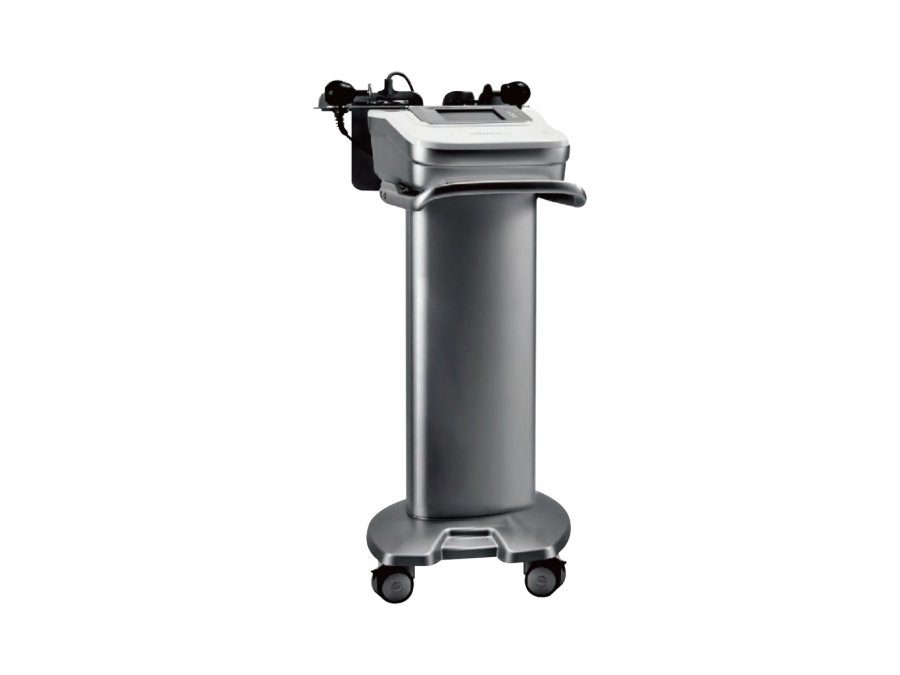
While high-frequency 6.78 MHz monopolar RF excels at rapid thermal collagen denaturation, postoperative surgical recovery, visceral metabolic contouring, and chronic cellulite require gentle, deep-penetrating biostimulation without thermal shock. A specialized 448kHz CET RET radiofrequency machine—operating via Transfer of Energy Capacitive and Resistive (TECAR) physics—mobilizes intra- and extracellular electrolytes across tissue membranes to accelerate lymphatic clearance, soften post-liposuction fibrosis, and restore dermal elasticity.
Clinical Engineering Callout: 448 kHz Sub-Thermal Biostimulation vs. Hyperthermic Remodeling
At exactly 448 kHz, alternating electromagnetic waves induce ionic oscillation across cell membranes rather than violent dipolar water rotation. Operated at low intensity (athermic 37°C–39°C), 448 kHz restores resting transmembrane potential (-70 mV) to stimulate microcirculation and lymphatic drainage; elevated to 41°C–44°C, it triggers deep HSP47 fibroblast activation, lipolysis, and fibrotic scar remodeling without epidermal trauma.
1. Capacitive (CET) vs. Resistive (RET) Electrode Physics at 448 kHz
Every clinical-grade 448kHz CET RET radiofrequency machine employs two complementary monopolar electrode architectures paired with a large stainless-steel neutral return plate placed opposite the treatment zone. Understanding the electrical impedance contrast between CET and RET electrodes is essential for targeting superficial dermis versus deep fascia and adipose septa.
In Capacitive Electric Transfer (CET), the active handpiece electrode is coated in a thin biocompatible ceramic or polyamide dielectric insulator. Because direct ohmic conduction is blocked by this insulating layer, the electrode-skin interface acts as a physical capacitor. Electromagnetic energy accumulates in high-water-content, low-impedance superficial tissues immediately beneath the electrode—specifically the reticular dermis, superficial vasculature, and subcutaneous lymphatics (0.5 cm to 2.5 cm depth).
In Resistive Electric Transfer (RET), the active electrode is bare, uninsulated surgical stainless steel or titanium. Current flows continuously through the body toward the neutral return plate along paths of least resistance—bypassing soft hydrated muscle slightly while concentrating Joule heating at higher-impedance fibrous structures: collagenous septa, fascia, ligaments, dense post-surgical scar adhesions, and deep visceral-adjacent adipose tissue (3.0 cm to 8.0 cm depth).
- CET Mode Targets: Facial dermal laxity, periorbital fluid retention, post-op edema clearance, and superficial skin laxity.
- RET Mode Targets: Deep abdominal/visceral adipose metabolism, stubborn trochanteric cellulite septa, and hardened post-liposuction fibrotic nodules.
- Zero-Pain Non-Invasive Tolerance: Unlike 65°C thermal coagulation, 448 kHz TECAR operates comfortably at 38°C–44°C, allowing 30–45 minute manual sculpting sessions with zero topical anesthesia.
2. Post-Liposuction Fibrosis, Seroma Drainage & Post-Op Recovery Protocols
Plastic surgeons and medical spas increasingly integrate 448 kHz TECAR protocols as standard post-liposuction and post-abdominoplasty care. Following cannula trauma, lymphatic vessels are disrupted, triggering interstitial fluid stagnation, ecchymosis, and progressive transformation of fibrin clots into dense, palpable subcutaneous nodules (post-liposuction fibrosis) by weeks 2–6.
During the Acute Phase (Days 3–14 post-op), clinicians run CET mode in athermic setting (10%–25% power output, keeping skin temperature 37.5°C–39.5°C). Gentle circular strokes directed toward inguinal or axillary lymph nodes accelerate interstitial fluid reabsorption and macrophage clearance of bruising without aggravating surgical inflammation.
During the Fibrotic Remodeling Phase (Weeks 3–12 post-op), clinicians switch to RET mode combined with dynamic myofascial kneading at 41°C–43.5°C. Resistive current preferentially heats dense, low-hydration fibrotic collagen bands, increasing tissue pliability, breaking down subcutaneous tethering, and preventing permanent contour dimpling.
3. Visceral Adipose Mobilization & Dual-Action Facial Rejuvenation
Beyond surgical recovery, 448 kHz RET energy stimulates deep abdominal microvascular perfusion and catecholamine-mediated lipolysis in both subcutaneous and deep peri-visceral adipose depots. Raising deep tissue temperature by +3°C to +4°C enhances enzymatic lipase activity and oxygen delivery, making 448 kHz TECAR an ideal metabolic primer prior to 2 MHz macro-focused ultrasound lipolysis or cryolipolysis.
On the face and neck, alternating 10 minutes of deep RET fascial release over the masseter and submentum with 12 minutes of CET superficial dermal heating produces immediate post-treatment lymphatic de-puffing, jaw-line definition, and progressive fibroblast proliferation.
4. Conductive Cream Selection, Return Plate Placement & Safety Checks
To maintain low contact impedance and prevent edge heating, always apply an aqueous, high-conductivity TECAR cream formulated specifically for 448 kHz impedance matching (standard ultrasound gel dries too rapidly under sustained RF). Ensure the large neutral return plate sits flat against a clean, well-hydrated muscular area (such as the lumbar back or contralateral glute) with full surface contact.
Screen patients for pacemakers, implanted electronic neurostimulators, active deep vein thrombosis (DVT), pregnancy, or acute bacterial cellulitis before initiating treatment. Never hold the RET electrode stationary over bony prominences; maintain continuous fluid gliding speed of 3–5 cm/sec.
448 kHz CET vs. RET Clinical Protocol & Parameter Matrix
Select electrode modality, thermal range, and session cadence according to clinical indication and post-operative healing stage:
| Clinical Indication | Electrode Mode | Target Tissue Temp | Typical Power & Duration | Recommended Cadence |
|---|---|---|---|---|
| Acute Post-Liposuction Edema (Days 3–14) | CET (Insulated Capacitive) | 37.5°C – 39.5°C (Athermic) | 15% – 25% power, 20 – 25 min | 2–3 sessions / week for 2 weeks |
| Chronic Post-Op Fibrosis & Scar Nodules | RET (Bare Resistive) + Manual | 41.5°C – 43.5°C (Hyperthermic) | 35% – 55% power, 25 – 30 min | 2 sessions / week (Weeks 3–10) |
| Visceral & Abdominal Fat Metabolism | RET (Deep) + CET (Skin Firming) | 42.0°C – 44.0°C | 50% – 70% RET (20m) + CET (10m) | 2 sessions / week (8–12 total) |
| Facial Lymphatic Lift & Jawline Sculpting | RET (Masseter) + CET (Dermis) | 39.0°C – 41.5°C | 20% – 35% power, 20 min | 1 session / week (6-session course) |
| Fibrous Cellulite & Gynoid Lipodystrophy | RET (Septal Softening) + CET | 41.0°C – 43.0°C | 40% – 60% power, 30 min/zone | 2 sessions / week for 5 weeks |
5. Cellular Transmembrane Kinetics, Heat Shock Proteins & Adipose Lipolysis
At the cellular level, 448 kHz alternating current sits directly below the threshold that triggers neuromuscular action potentials (typically <100 kHz) yet well below pure dielectric microwave dispersion. Consequently, a clinical 448kHz CET RET radiofrequency machine drives continuous potassium, sodium, and calcium ion flux across phospholipid bilayers without causing uncomfortable muscle twitching or epidermal burns. This transmembrane ionic oscillation restores cellular metabolic respiration in hypoxic, edematous post-surgical tissue and stimulates endogenous synthesis of Heat Shock Proteins (HSP47 and HSP70).
HSP47 acts as a dedicated molecular chaperone essential for proper folding and triple-helix assembly of newly synthesized Type I and Type III procollagen. Simultaneously, elevating subcutaneous adipose tissue to 42°C–44°C via deep Resistive Electric Transfer (RET) upregulates hormone-sensitive lipase (HSL) and local microcirculatory oxygen tension, facilitating sustained triglyceride hydrolysis into free fatty acids cleared smoothly via hepatic and lymphatic pathways.
6. Contraindications, Post-Op Surgeon Coordination & Anatomical Precautions
- Post-Liposuction Timing Coordination: Initiate sub-thermal CET lymphatic passes only after surgical incisions have closed superficially (or protect open drain ports with sterile occlusive dressings) and confirm absence of active hematoma, acute deep vein thrombosis (DVT), or seroma infection.
- Return Plate & Implant Safety: Keep all metallic orthopedic plates, surgical clips, and IUDs outside the direct current path between the active electrode and neutral return plate, as metallic implants concentrate conductive current and heat rapidly. Avoid treating directly over the thyroid gland, carotid sinus, gravid uterus, or active malignant lesions.
- Dual-Device Aesthetic Pairing: Clinics routinely pair WINBACK CELL CYCLE 448kHz TECAR lymphatic mobilization with THERMATRIX CELL 6.78MHz Monopolar RF structural tightening to address both fluid retention/fibrosis and deep laxity across post-bariatric or post-pregnancy patients.
7. Handpiece Ergonomics, Cable Shielding & High-Utilization Spa Economics
Unlike consumable-heavy RF cartridges, 448 kHz CET and RET stainless-steel/ceramic electrodes are permanent, autoclavable/disinfectable titanium-alloy and dielectric heads requiring only low-cost conductive TECAR cream per session. High-frequency coaxial cable shielding prevents RF leakage and operator wrist fatigue during 40-minute manual sculpting protocols, delivering nearly 90% gross margin per treatment while anchoring lucrative 10-session post-op surgical recovery partnerships with local plastic surgery centers.
Clinical Integration, Product Architecture & Pillar Reference
Clinical practices seeking dedicated cellular biostimulation and postoperative recovery capabilities can deploy the WINBACK CELL CYCLE 448kHz TECAR System alongside high-frequency structural tightening on the THERMATRIX CELL Monopolar RF Platform. To compare 448 kHz ionic conduction against 6.78 MHz dipolar collagen denaturation, read our comprehensive medical aesthetic RF device technical guide.
Frequently Asked Questions (Clinical & Engineering)
Why is 448 kHz specifically used in CET/RET medical aesthetics?
448 kHz sits in the optimal biological resonance window to mobilize intra- and extracellular ions across cell membranes, boosting ATP synthesis, lymphatic clearance, and fibroblast activity without triggering painful muscle fasciculation or epidermal burns.
When can 448 kHz TECAR begin after liposuction surgery?
Sub-thermal athermic CET lymphatic drainage can typically begin 3 to 7 days post-operatively (with surgeon clearance) to reduce bruising and seroma risk, transitioning to deeper RET heating at weeks 2–3 to resolve fibrosis.
What is the clinical difference between CET and RET electrodes?
CET electrodes use an insulated dielectric coating to focus energy in superficial hydrated dermis and lymphatics, whereas bare-metal RET electrodes drive current deeply into high-impedance fascia, fibrotic scars, and deep adipose septa.