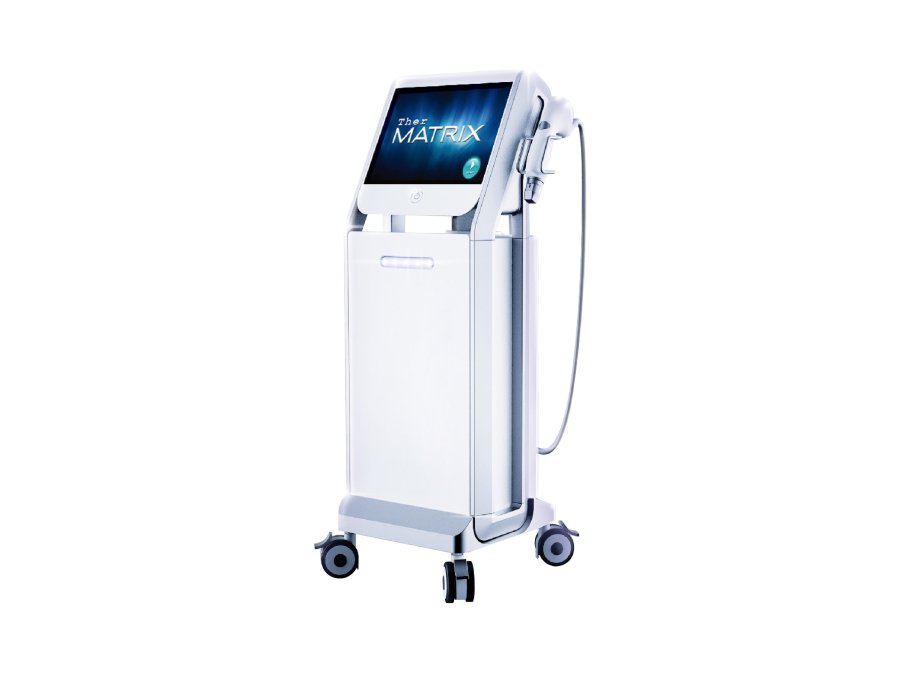
Periorbital skin laxity, upper-eyelid hooding, and crepey infraorbital rhytids pose a unique therapeutic dilemma: surgical blepharoplasty carries scarring and ectropion risks, ablative lasers demand extended downtime, and penetrating needle arrays require ocular shields near the globe. Non-invasive mesh fractional RF skin tightening—exemplified by 144-pin MATRIX Grid Fractional Radiofrequency (GFR)—resolves this gap by delivering sublative thermal coagulation grids directly across the epidermis into the reticular dermis without mechanical puncture.
Clinical Engineering Callout: Sublative Inverted-Pyramid Thermal Geometry
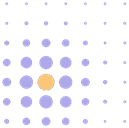
Unlike bulk-heating continuous monopolar electrodes, a 144-pin mesh-segmented tip distributes 2 MHz–4 MHz RF current across discrete micro-electrode contact points. Because current density expands laterally beneath the high-impedance stratum corneum, each micro-pin generates an inverted-pyramid thermal profile: minimal 5%–10% epidermal footprint paired with broad 58°C–65°C volumetric coagulation inside the papillary and mid-reticular dermis, preserving untouched perilesional keratinocytes for 24–48 hour recovery.
1. Biophysical Mechanism of 144-Pin Mesh-Segmented Grid Fractional RF (GFR)
Traditional non-invasive monopolar radiofrequency creates uniform bulk dermal heating across a single flat capacitive membrane, requiring high-capacity cryogen or Peltier cooling to protect the skin surface. While effective for broad malar and jawline tightening, bulky 3 cm²–4 cm² monopolar tips cannot easily conform to the narrow 8–12 mm anatomical corridor between the ciliary margin and supraorbital rim.
A 144-pin mesh fractional RF skin tightening matrix overcomes both geometric and thermal limits through segmented current delivery. Rather than energizing all 144 micro-electrodes simultaneously—which would behave electrically like a solid plate and risk bulk epidermal heating—advanced multiplexing electronics fire pins in staggered micro-clusters over a 20–80 millisecond pulse window. Each micro-electrode pin acts as a localized current source creating tiny, self-limiting microscopic thermal zones (MTZs) separated by bridges of intact epidermis.
Within the stratum corneum, dry corneocytes exhibit high electrical resistance, creating shallow sub-millimeter micro-ablation points (typically 40–90 microns wide) when high-fluence modes are selected, or purely non-ablative sub-surface heating when paired with aqueous conductive gel. Once the current crosses the dermal-epidermal junction into hydrated collagenous tissue (150–300 ohms), conductivity rises sharply and the thermal field fans outward into a 3D teardrop matrix at 0.6 mm to 1.8 mm depth.
- Epidermal Sparing Ratio (85%–92% Intact Surface): Rapid lateral migration of viable basal keratinocytes from untouched inter-pin tissue closes micro-crusts within 24–36 hours.
- Zero Needle Penetration Near the Globe: Eliminates retrobulbar bruising, needle fishhooking, and periosteal pain across thin 0.5 mm eyelid dermis.
- Multiplexed Impedance Sensing: Micro-processor feedback samples contact resistance prior to each cluster pulse, preventing edge arcing along curved orbital rims.
2. Non-Invasive Periorbital & Upper-Eyelid Tightening Protocols
Treating the upper eyelid crease, lateral canthal crow’s feet, and infraorbital festoons requires rigorous anatomical boundary discipline. Clinicians operate within the bony orbital margin (protecting the globe with sterile corneal shields only if treating directly on the tarsal plate, though most MATRIX GFR protocols treat up to the orbital rim and mobile lid fold using gentle upward skin traction over the supraorbital bone).
Begin by degreasing the periorbital frame thoroughly with alcohol-free cleanser and applying a thin uniform conductive film or operating in dry-stamp sublative mode depending on the clinical endpoint. Using a dedicated compact 64-pin or 144-pin eye-contour cartridge, execute sequential single-pass stamping at 10%–15% overlap along three anatomical vectors: (1) supraorbital brow-lift vector (pulling forehead skin upward over bone), (2) lateral canthal radial crow’s-feet fan, and (3) infraorbital tear-trough tightening vector while retracting cheek skin laterally away from the lower lid margin.
- Pass 1 (Deep Reticular Remodeling): Medium pulse duration (40–60 ms) at 12–18 J/cm² equivalent matrix output to contract deep reticular collagen and tighten redundant upper-lid fold skin.
- Pass 2 (Superficial Textural Smoothing): Shorter high-peak pulse (20–30 ms) at lower energy to soften fine crepey epidermal lines without inducing prolonged crusting.
- Clinical Endpoint: Uniform mild erythema, subtle perifollicular edema, and patient-reported warm prickling comfort score of 4–5/10.
3. Sublative Dermal Remodeling vs. Ablative Lasers & Needle RF
For patients presenting with early-to-moderate dermatochalasis, post-acne textural irregularity, or Fitzpatrick IV–VI photoaging, choosing between 10,600 nm CO2 fractional lasers, insulated microneedle RF, and 144-pin mesh fractional RF hinges on downtime tolerance and melanocyte safety. Because 144-pin GFR deposits 80%+ of its thermal energy sub-epidermally without open bleeding channels or broad optical melanin absorption, post-inflammatory hyperpigmentation (PIH) rates remain exceedingly low even in Asian, Mediterranean, and darker phototypes.
Moreover, when combined sequentially with 6.78 MHz bulk monopolar radiofrequency, clinicians achieve true dual-plane synergy: deep reticular and fibrous septal contraction via volumetric monopolar RF paired with superficial papillary collagen cross-linking and pore tightening via the 144-pin mesh matrix.
4. Pre-Treatment Preparation, Tip Hygiene & Post-Care SOP
Although many patients tolerate low-to-moderate 144-pin GFR settings without anesthesia, applying a light topical lidocaine cream for 20 minutes improves comfort during high-density periorbital stacking passes. Ensure all topical cream is completely removed and skin is bone-dry prior to firing dry-stamp sublative grids, as residual oily film alters pin contact impedance and can trigger uneven micro-sparks.
Following treatment, apply sterile hyaluronic acid or copper-peptide cooling mist for 10 minutes. Instruct patients to avoid makeup for 24 hours, utilize gentle ceramide barrier moisturizer, and wear UV-blocking sunglasses plus mineral SPF 50+ sunscreen for 7 days. Schedule 3 sessions spaced 4 weeks apart for cumulative collagen matrix densification lasting 9–14 months.
Clinical Parameter Matrix: 144-Pin Mesh Fractional RF vs. Bulk Monopolar RF & CO2 Laser
Compare biophysical penetration geometry, thermal profile, downtime, and ideal anatomical indications across periorbital and facial tightening modalities:
| Parameter | 144-Pin Mesh Fractional RF (MATRIX GFR) | 6.78 MHz Monopolar RF (THERMATRIX) | 10,600 nm Fractional CO2 Laser |
|---|---|---|---|
| Energy Delivery Mode | Non-invasive segmented 144-pin RF grid | Bulk capacitive monopolar RF | Ablative optical micro-vaporization |
| Primary Thermal Zone | Inverted-pyramid (0.6 – 1.8 mm dermis) | Volumetric dermis & septa (1.5 – 4.0 mm) | Open epidermal-dermal column (0.3 – 1.5 mm) |
| Target Coagulation Temp | 58°C – 65°C sublative matrix | 60°C – 65°C bulk reticular dermis | >100°C vaporization + surrounding halo |
| Fitzpatrick IV–VI Safety | High (minimal melanin absorption) | Very High (chromophore-independent) | Moderate-Low (higher PIH risk) |
| Social Downtime | 24 – 48 hours mild grid erythema | 0 hours (lunchtime procedure) | 5 – 10 days crusting & erythema |
| Primary Periorbital Role | Upper eyelid fold, crow’s feet, crepey under-eye | Brow elevation, deep malar vector tightening | Severe deep etched static rhytids |
5. Multiplexed Pin-Firing Engineering, Thermal Relaxation & Tissue Impedance Control
From an electrical engineering standpoint, the primary failure mode of older non-insulated grid RF tips is edge-effect current crowding. When a square array fires simultaneously, electrical field lines concentrate sharply along the outer perimeter pins, causing superficial pinpoint burns around the edges of the 1 cm² tip while under-heating the center dermis. On the MATRIX GFR architecture, high-speed solid-state MOSFET switches multiplex the 144 gold-plated micro-electrodes into micro-zones fired in rapid sequential pulses of 3 to 8 milliseconds each.
This sequential multiplexing keeps inter-pin lateral heat conduction strictly below the epidermal Thermal Relaxation Time (TRT ~2–4 ms for stratum corneum micro-spots) while allowing deep reticular heat to accumulate cumulatively across the 0.6 mm–1.8 mm sublative pyramid. Integrated real-time impedance feedback verifies contact resistance across every quadrant before releasing the full pulse; if an operator tilts the tip across a curved brow bone or lateral canthus, the generator automatically withholds firing until planar contact is restored, preventing inadvertent epidermal spark marks.
6. Contraindications, Patient Selection & Periorbital Combination Protocols
Proper patient stratification maximizes clinical satisfaction and minimizes adverse events during mesh fractional RF skin tightening:
- Ideal Candidates: Patients aged 28–65 presenting with mild-to-moderate upper-eyelid hooding, fine infraorbital crepiness, early crow’s feet, enlarged malar pores, or mild atrophic acne texture who cannot accommodate 7-day laser crusting.
- Combination Synergy: For patients with deep brow descent or severe lower-face laxity alongside periorbital crepiness, combine 144-pin MATRIX GFR around the orbital rim with THERMATRIX CELL bulk 6.78 MHz monopolar RF across the forehead, cheeks, and jawline—delivering simultaneous multi-depth dermal matrix remodeling in a single 45-minute appointment.
- Absolute Contraindications: Defer treatment in patients with active ocular or periorbital infections (blepharitis, conjunctivitis, herpes simplex), implanted cardiac pacemakers or electronic cochlear devices, recent isotretinoin therapy within 3 months, active autoimmune collagen vascular disorders, or unhealed surgical blepharoplasty incisions under 12 weeks old.
7. Disposable Tip Economics & Multi-Session Clinical ROI
Because each 144-pin fractional cartridge undergoes medical-grade EO sterilization and precision pin planarization, tips are strictly single-patient consumables (typically rated for 400–600 pulses per patient session—covering full periorbital, full-face, and upper-neck stamping). High-margin 3-session eye-rejuvenation and pore-tightening packages generate rapid clinic turnover with under 30 minutes of room utilization and strong repeat-patient adherence.
Clinical Integration, Product Architecture & Pillar Reference
To build a comprehensive non-invasive facial rejuvenation suite, explore the MATRIX GFR 144-Pin Fractional RF System for delicate periorbital and textural remodeling alongside the THERMATRIX CELL 6.78MHz Monopolar RF Platform for deep full-face structural tightening. For full biophysical fundamentals on capacitive vs. multipolar radiofrequency depth, consult our core medical aesthetic RF device clinical engineering guide.
Frequently Asked Questions (Clinical & Engineering)
How does 144-pin mesh fractional RF tighten eyelids without needles?
Segmented RF micro-electrodes bypass surface bulk heating by concentrating current beneath the stratum corneum in an inverted-pyramid grid, heating reticular dermal collagen to 58°C–65°C at 0.6–1.8 mm depth without puncturing thin eyelid skin.
What is the expected downtime after MATRIX GFR periorbital treatment?
Patients typically experience 24 to 48 hours of mild erythema and microscopic pin-grid texture that can be covered with mineral sunscreen or makeup after 24 hours.
How many sessions are recommended for periorbital tightening?
A standard clinical course consists of 3 to 4 treatments spaced 3 to 4 weeks apart, with Type I collagen remodeling continuing for 90 days after the final session.